

Inner Griots: Inner Children Using Storytelling & The Ancestors to Heal Black Trans & Non-Binary Trauma Survivors
For Black trans & non-binary trauma survivors/Hoodoos, the greatest cycle breaker is the person we used to be

The Full Moon Folklorist is a newsletter where you can read original Black Speculative Fiction and Non-Fictional essays and short stories. All works include Afrocentric Horror, Science Fiction, Folklore, Urban Fantasy, and Magical Realism. If that’s your jam, be sure to subscribe to receive updates in your inbox.
Like the dead-seeming cold rocks, I have memories within that came out of the material that went to make me.
---Zora Neale Hurston
The one important lesson I’ve learned since I became a Hoodoo is that silence is a mere illusion. For instance, Nature whispers to us the moment we step outside, greeting us in the language of Wind and Rustling Leaves. Every day, we have full-blown conversations with our ancestors as we sit in front of the altar, either with our mouths or with our thoughts. Even our bodies respond to the energy lingering in empty spaces we enter, picking up on energetic remnants of whatever happened only a few minutes ago. Regardless of its approach, sound is everywhere. It’s inescapable and will never allow itself to be drowned out with noise-cancelling earphones or a silent room.
Our Inner Children operate no differently. Like sound, these internalized versions of us can be neither hushed nor erased. If anything, they wish to communicate with us. This is especially the case for Hoodoos who are survivors of Adverse Childhood Experiences (ACE). Our Inner Children and even our Young Adults use memories to grab our attention all the time. Their recollections of the past reel inside our heads like movie clips, showing us through their eyes the traumatic incidents that occurred while children made of flesh and bone. They do this not to cause harm but because they need help unpacking all that transpired so they can finally let it go. As a result, most Hoodoos/ACE survivors turn to storytelling.
I’m one of them. As it is, storytelling is a way of life for me. Holding a pen in my hand is a common occurrence, so much so that my hand feels strange without it. Though I normally write Black Speculative Fiction, the story I’m currently working on doesn’t involve fictional characters. I’m instead being led by my ancestors to write my history as an ACE survivor on paper. Or more specifically, the history of the girl/woman everybody around me mistook me for. And after years of trying, she’s more than ready to tell the world her story.
At thirty-six years old, I realized that my identity as a woman wasn’t just a complete lie but that it was the crux of unnecessary suffering. As I stood on a house porch shrouded in darkness on that August night in 2017, I let myself out of the closet as a genderless transmasculine person. I christened myself with a more suitable name: Louis. Life has been good so far. Yet before that night, I lived a separate history as somebody else completely different from me. Her name was Meeka.
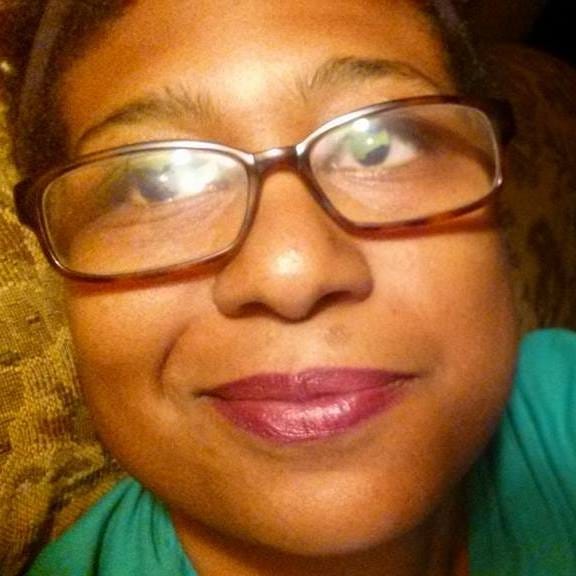
Her lifetime is an odyssey that spans decades, so I’ll keep it short. Meeka was a survivor of intergenerational trauma and community violence. The abuse varied in form and severity. Granted, there were snippets of incredible moments sprinkled throughout her lifetime, yet Meeka’s lived history was riddled with memories of her witnessing conflict or being its unwilling target. Worsening the matter for my former self was that the violence she endured was designed for cis Black girls/women. But there was a plot twist. Meeka was never supposed to be a girl who’d one day stumble into womanhood. At the same time, she wasn’t meant to be a boy either. And my old self understood that even at the ripe young age of five. She wasn’t interested in anything pertaining to girlhood. But living as a man was no different or better than living inside a female body. The mere thought of being stuck with choosing between one or the other made the poor child’s spirit flinch like it was poked by a bed of thorns.
For one, she didn’t understand why the titles Girl/Woman or Boy/Man seemed as vital as breathing to everybody and anybody she stood beside. Why chew your nails down to their nubs trying to be one or the other, she thought, when you could simply chuck them both? That was what Meeka did. She considered herself neither because the labels didn’t match what or who she truly was. Now the child lived in a time when words like non-binary or genderless or transmasculine didn’t touch our tongues yet. So, she didn’t have the words to describe how she saw herself. All Meeka knew was that the binary wasn’t part of her ministry and therefore wanted nothing to do with it.
What she did see herself as was one who carried the strength of one thousand warriors. During the first years of her childhood, Meeka imagined herself wielding this incredible power. In her mind, she was so tall her shoulders brushed against the leafy crown of the highest tree. And she harbored strength that earned even Godzilla’s respect. She felt whole in her masculine energy. Unfortunately, Meeka learned that she was the only one who thought of herself in that regard. Her family—her parents in particular—noticed the ways the child moved. It was mostly her strange notions about girlhood and her lack of shame around how she carried herself that unsettled them. Enraged them even. It needed immediate correction, even if it meant ripping her wings out of her flesh. So, her parents and most of her relatives began punishing her through ridicule and shaming. Her people didn’t care for the superhuman strength or the amount of unconditional love she gave without question. They instead were only concerned with making sure she was what the family needed to be comfortable. Not wanting to be the cause of their troubles, Meeka resolved to become what the family needed her to be: a girl.
She was around nine years old when she decided to try girlhood. From that moment on, Meeka began the task of living as a girl who’d one day stumble into what her people considered womanhood. When that time finally came, she lived as someone striving to be seen as what others wanted her to be. She grew more committed to the role of Black Woman, twisting herself like a balloon to morph into something acceptable. Into somebody beautiful enough to be considered normal by the family that almost humiliated her to death. She always stared at her likeness in front of mirrors. Every time, sorrow gushed from her dark brown eyes like tears noticed only by her gaze. I don’t care what I have to do, Meeka thought as she locked eyes with her reflection. I’m going to get this right.
Everyday, she worked at being the epitome of Black womanhood her family would be proud of. Yet while she kept on, Meeka couldn’t help but notice the shadowy hole in her chest where her heart should be. The dull ache that spilled out of the empty space lingered as if it had no intention of leaving. The episodes of depression only intensified the ache. She had her heart checked out and the doctor told her that he didn’t find anything wrong. And her depression was something she was seeing the head doctor for. So, she was at a loss.
Then one August night, Meeka was walking home from her favorite coffee shop. She only lived across the street, so it didn’t take her long. While sipping her iced pumpkin spice latte, her mind drifted onto the mental list of male names her parents should’ve/could’ve given her. For some reason, she got stuck on George. Nancy Drew had a female cousin named George, Meeka thought somewhat bitterly while pulling her keys out of the pocket of her jeans. Why couldn’t MY name be George?
Without thinking about it, she tried on the name just to see how it felt on her. This small act shook something loose inside of her, brought to life like an old generator after a good kick. Meeka didn’t know why but changing her name to one often giving to men gave way to a sense of euphoria. The last time she experienced an emotion that vibrant was when she was a kid. Back then, she felt like the most powerful person in the world. Meeka stopped going out of her way to get into the house. She stood quietly on the porch, letting the feeling sink in a little. On August 10, 2017, she finally understood why she always felt like her life was snatched from her hands. In some ways it was, as the gender-specific abuse inflicted caused her to believe that she didn’t have a choice but to lie. Yet on the night Meeka and I switched places, she found out otherwise.
Everything I’ve just shared with you is an abridged version of Meeka’s history. And it’s one I’ve attempted to avoid for a variety of reasons, one of them wanting to live my own history as an openly out trans person. However, my ancestors have informed me that her lifetime is meant to be archived in the form of a memoir. They’ve told me her story exists as a source of healing for Black trans and non-binary folks. This is especially the case for those who are in community with their Inner Children. The inner version of us are their own people who carry their own understanding of the past, mainly because they’ve experienced life as one perceived as a cis person. Meaning we are raising Inner Children who may appear as their assigned gender. Approaching our relationship with them in this possibility in mind allows survivors to navigate their past from an intersectional standpoint.
But while called to display graphic depictions of Meeka’s past, I’m to illuminate on my daily life as Louis. I no longer feel like a question mark with feet. I have a handle on who I am today and what I want my life to look like. I have people in my life today that care about my well-being and want nothing but the best for me. This extends to how I connect with people in the recovery community. I’m a member of Adult Children of Alcoholics Anonymous (ACA). Within the safety of the room, I’ve since met other Black folks I’ve come to know as close friends—even family in some cases. Speaking of which, I’m to tell survivors stories about all the ways Hoodoo connects me to the Highest and Best of my ancestors. My history includes communicating with spirit relatives who accept and love me unconditionally. They don’t expect me to contort myself into something I could never be but just want me to simply show up. My quality of life is a sigh of relief. It’s far from perfect but a hell of a lot better than it was.


Long story short, our Inner Children use their memories to grab the attention of the adult we manifested into. Unfortunately, many of us unknowingly sever ties with these parts of ourselves as we become adults. Most trans and non-binary ACE survivors assume the former version of themselves disappear the second they come out, taking with the memories of all what life used to be. But we learn these parts of us just don’t slip into obscurity. They instead become griots who rely on their personal history to tell their stories, mainly for us to help them sift through them to comprehend all of what occurred. My Inner Children have been inside my body the entire time, their vivid recollections as loud as their screams vying for my undivided attention. Writing their story down on paper is the most sensible way to make certain they are heard. My Hoodoo practice have since shown me that those past incidents are meant to bloom into stories Black trans and non-binary survivors see themselves in. But more importantly, Meeka is to see that she’s never been alone in her struggles. That she and the other Inner Children can let go of the stories. And when I print the history on paper, I can put the past behind me and Meeka can finally rest.
The Full Moon Folklorist is a newsletter where you can read original Black Speculative Fiction and Non-Fictional essays and short stories. All works include Afrocentric Horror, Science Fiction, Folklore, Urban Fantasy, and Magical Realism. If that’s your jam, be sure to subscribe to receive updates in your inbox.
You can also follow the Full Moon Folklorist on Bluesky, Threads, Instagram, and Substack!
Thank you for sharing your story. Powerful and inspiring.
So beautiful, nice to meet you Louis. This was well needed, thank you for sharing.